At the opening day of the Global Design Forum designer and artist Fernando Laposse delivered a talk that moved far beyond aesthetics and into the emotional, political and deeply personal dimensions of climate action. Drawing from his own experiences with environmental grief, community building and self-sufficiency, Fernando challenged the audience to rethink not only what design looks like, but what it actually does.
Rather than presenting design as a discipline of surfaces and symbolic gestures, Fernando argued for what he called “works that work”: objects and systems that actively participate in ecological repair and collective empowerment.
The talk began with an unusually intimate confession. Fernando spoke candidly about his growing despair in the face of climate collapse, admitting that years spent producing abstract representations of environmental catastrophe had left him feeling disconnected and powerless. He described becoming disillusioned with art that merely illustrates crisis without materially engaging with it.
His turning point came unexpectedly while converting a camper van and learning to wire solar panels himself. The experience, simple yet transformative, altered his relationship to climate anxiety. Watching sunlight charge a battery through a system he had physically assembled gave him a new sense of agency. The significance was not technological optimism, but participation. “I had done something meaningful and connected to the problem that I was concerned with,” he explained.
This idea of participation became the central thesis of the lecture.
Fernando presented a series of projects that blur the boundaries between art, infrastructure and activism. Among them were engraved solar panels designed to make renewable technology visually compelling, hand-built windmills, and even functioning lemon batteries — humorous yet pointed critiques of conceptual artworks that symbolise sustainability without actually generating power. “I was frustrated that artists were demonstrating the power of these things,” he said, “but not actually making them work.”
For Fernando, the role of contemporary design is not simply to represent solutions, but to distribute capability.
One of the most compelling sections of the talk focused on community-owned renewable energy systems. Fernando described the energy cooperative he is developing on the Greek island where he lives — a collective initiative through which residents build and own renewable infrastructure together. The project, he argued, is not just about sustainability, but democracy itself: citizens literally “taking back power.”
What emerged throughout the lecture was a rejection of passive consumer culture in favour of participatory making. Fernando repeatedly returned to the psychological importance of learning practical skills, suggesting that many forms of ecological despair stem from feelings of helplessness and disconnection.
To illustrate this, he invoked the legacy of Walter Segal, the German-born architect who pioneered self-build housing systems in Britain after the Second World War. Fernandez described how Segal enabled people on social housing waiting lists to construct their own homes collectively, fostering not only shelter but long-term confidence and community resilience.
Fernando then turned to his own experiments in ecological construction using locally sourced seagrass as insulation material in Greece. Collected from nearby beaches and integrated into handmade structures, the material became symbolic of a broader philosophy: meaningful sustainability must emerge from local knowledge, available resources and direct engagement with place.
In one of the talk’s strongest critiques, Fernando reflected on his participation in the Venice Architecture Biennale. He criticised exhibitions that present sustainable materials as isolated miracle solutions without addressing the deeper cultural shift required. The real lesson, he argued, is not the material itself but the attitude behind it — communities learning to work with what already exists around them.
By the end of the lecture, Fernando’s vision of design had become clear. Design, in his view, is not about creating ever more sophisticated objects for passive audiences. It is about rebuilding relationships: between people and technology, between communities and resources, and ultimately between humans and the ecosystems they inhabit.
His closing reflections were perhaps the most poignant. Working with natural materials, he explained, had fundamentally changed the way he relates to the environment itself. Through building, gathering and making, he had developed a lived intimacy with the landscapes around him — not as abstract “nature,” but as something reciprocal and alive.
On the first day of the Global Design Museum, Fernando offered a powerful reminder that the future of design may depend less on innovation alone and more on participation, humility and collective repair.
The Global Design Forum, London Design Festival’s flagship platform for global design discourse, is presented in collaboration with People Places Ideas (PPI), with Artistic Direction from Melek Zeynep Bulut. @peopleplacesideas
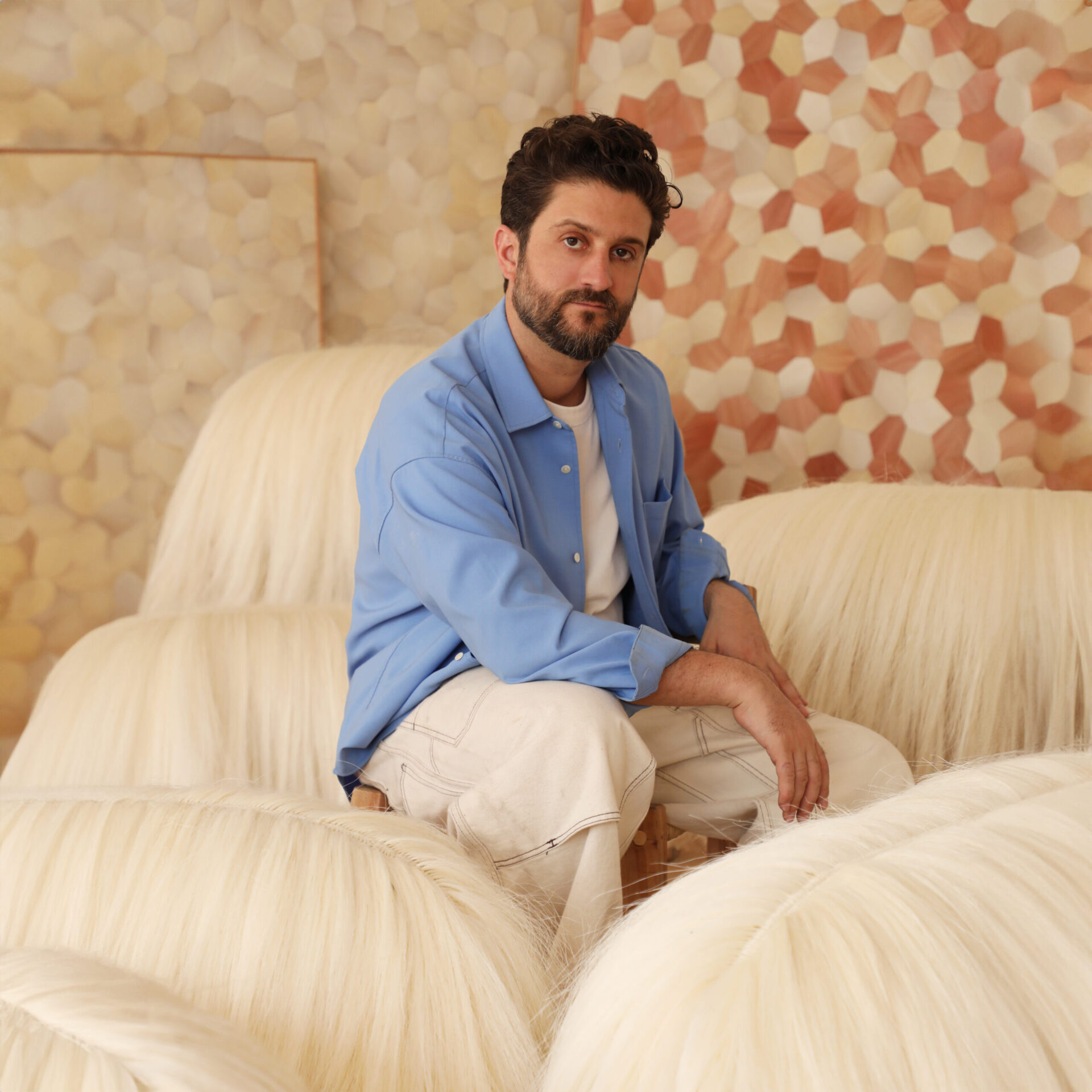
Fernando Laposse is a Mexican designer who specializes in transforming humble natural materials into
refined design pieces. He has worked extensively with overlooked plant species indigenous to Mexico such
as sisal, loofah, and corn leaves.
His works are the result of periods of research that are developed into objects where materials and their
historical and cultural ties to a particular location and its people take center stage. He often works with local indigenous communities and addresses topics such as the environmental crisis, the loss of biodiversity and migration through the transformative power of design.
Follow the editor on instagram @francescalombardo_auhour
Get in touch for reviews or coverage.