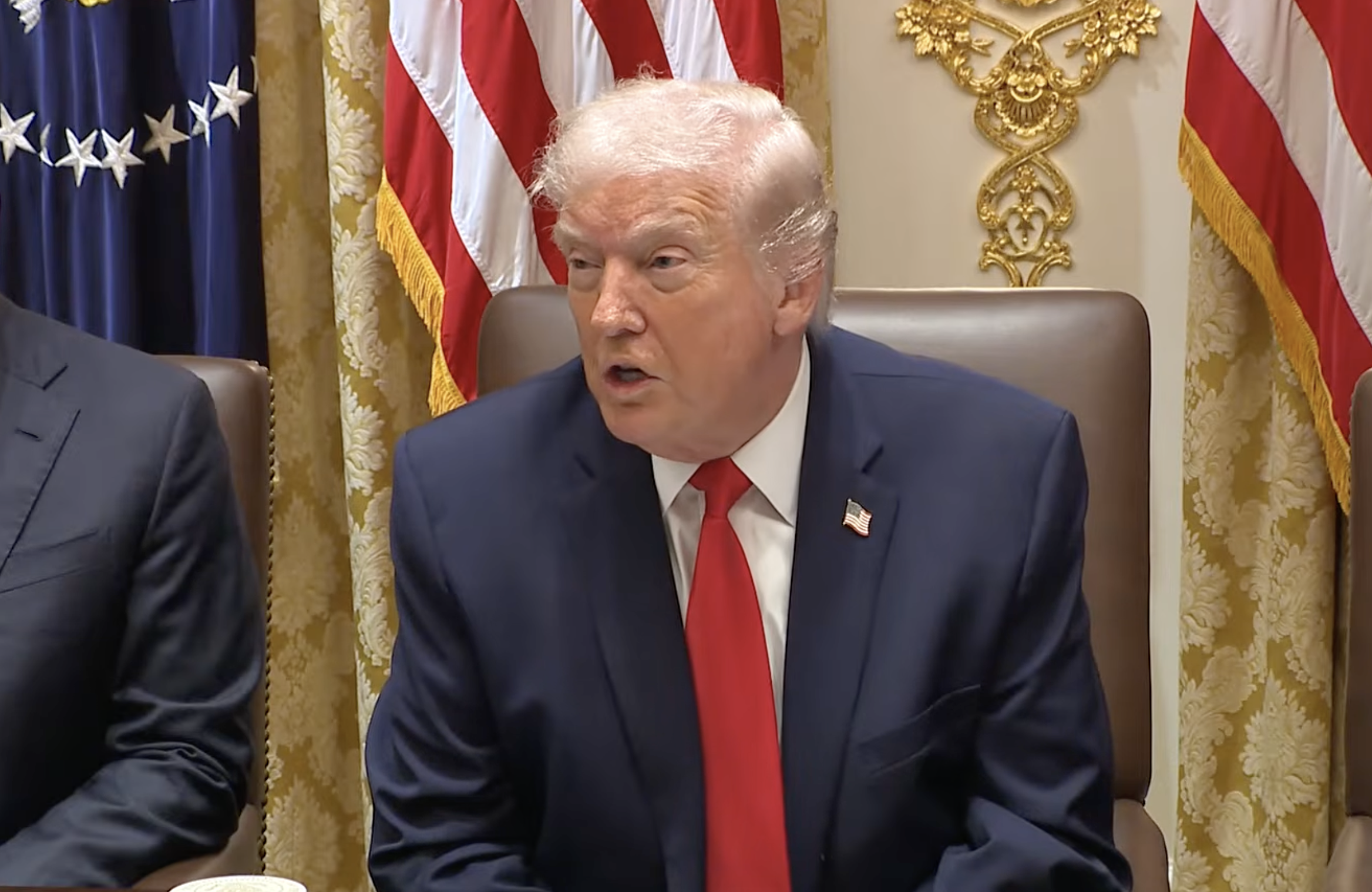
London – There is something strangely familiar about the images coming from Moscow.
On 5 September 2026, Vladimir Putin sat at the Kremlin with US envoys Steve Witkoff and Jared Kushner.
They talked for more than three hours.
No peace agreement emerged. No breakthrough was announced. But ideas for a possible path towards ending the war in Ukraine were discussed, before the American envoys moved on to Kyiv.
It is an image of diplomacy returning to a war that has now lasted for years.
But it is also an image that raises another question.
Because this is not the first time Russia and Ukraine — directly or through intermediaries — have tried to imagine how this war might end.
Four years ago, they were already negotiating.
And they got further than we sometimes remember.
Istanbul, 29 March 2022
Barely a month after Russia launched its full-scale invasion of Ukraine, Russian and Ukrainian negotiators met in Istanbul.
The discussions were not ceremonial.
Ukraine presented a concrete framework.
Kyiv proposed becoming a permanently neutral and non-aligned state. It would not join NATO and would not host foreign military bases or troops.
In return, Ukraine sought international security guarantees from a group of countries powerful enough to act if it were attacked again.
EU membership would remain possible.
Crimea would be addressed through a separate negotiating process over a period of 15 years.
The future of Donetsk and Luhansk would be discussed directly between the Russian and Ukrainian presidents.
The Ukrainian Presidency itself publicly described these proposals at the time.
But it also made something equally clear: nothing had yet been signed.
Important disagreements remained.
There was a framework for negotiation.
There was not yet a peace treaty.
That distinction matters enormously today.
Was peace really within reach?
Slovak Prime Minister Robert Fico has now reopened that question.
Fico argues that if major Western countries had not prevented Ukraine from signing an agreement with Russia in April 2022, the war could have ended years ago.
It is a powerful accusation.
It is also one that should not simply be repeated as established fact.
So we went back to what is known about those negotiations.
And what emerges is more complicated.
There was indeed substantial movement.
Neutrality was genuinely being discussed.
Security guarantees were genuinely being discussed.
The future relationship between Ukraine and NATO was genuinely being discussed.
Territory was being discussed.
The size and capabilities of Ukraine’s future armed forces were being negotiated.
Draft texts continued to circulate after the Istanbul meeting.
The possibility of a negotiated settlement was real.
But that is not the same as saying that a completed peace agreement was waiting for signatures.
It wasn’t.
The gaps were enormous
One of the biggest problems concerned the very mechanism designed to make Ukrainian neutrality possible: security guarantees.
Ukraine wanted guarantees sufficiently strong that, if Russia attacked again, guarantor states could come to its defence.
Russia sought provisions that would have required agreement among the guarantors before action could be taken.
That distinction was fundamental.
A guarantee that cannot operate without the agreement of the potential aggressor is very different from an automatic defence commitment.
There were also large differences over the future size of Ukraine’s military and its weapons.
And there were unresolved political and territorial questions.
So when we look back at Istanbul, two statements can simultaneously be true: there was a serious opportunity for diplomacy.
And: there was no finished peace agreement ready simply to be signed.
The history becomes misleading when either half of that reality is removed.
Then came Bucha
Between Istanbul and the negotiations that followed, the war itself changed the political environment.
Russian forces withdrew from areas around Kyiv.
In Bucha, Ukrainian authorities, journalists and international investigators documented the killing of civilians during the Russian occupation. Russia denied responsibility.
The discoveries had an enormous impact on Ukrainian public opinion and on the international perception of the war.
Trust — already extraordinarily limited — deteriorated further.
And yet there is another fact worth remembering.
Even after Bucha, President Volodymyr Zelensky said negotiations with Russia would have to continue.
Diplomacy did not disappear overnight.
But the conditions surrounding it were becoming progressively more difficult.
And then Boris Johnson arrived in Kyiv
On 9 April 2022, British Prime Minister Boris Johnson travelled to Kyiv.
His visit has since become one of the most contested episodes in the history of the failed negotiations.
A contemporary report by Ukrainska Pravda, citing sources close to Zelensky, said Johnson brought two messages: that Vladimir Putin should be pressured rather than negotiated with, and that even if Ukraine were ready to reach an agreement, some Western partners were not.
Later, Davyd Arakhamia, who led Ukraine’s negotiating delegation, also recalled Johnson saying that
Ukraine should not sign with Russia and should continue fighting.
This evidence should not be ignored.
Western governments clearly influenced Ukraine’s strategic environment.
Their weapons, financial support, political commitments and assessments of Russia’s military position inevitably affected Kyiv’s calculations.
But another part of Arakhamia’s account is equally important.
He did not say that Johnson possessed the authority to veto a Ukrainian peace agreement.
He explained that the Ukrainian delegation itself could not simply sign such an agreement, that constitutional questions existed, that trust in Russia was extremely low and that credible security guarantees remained unresolved.
The evidence therefore supports a more nuanced conclusion: Western governments influenced the environment in which Ukraine made its decision.
It does not establish that a completed peace agreement was ready and that the West simply ordered Ukraine not to sign it.
Influence is not the same thing as veto.
And a negotiating opportunity is not the same thing as guaranteed peace.
Why did Istanbul fail?
Perhaps the biggest mistake is searching for a single answer.
There probably wasn’t one.
By April 2022 several things were changing simultaneously.
Russia had failed to take Kyiv.
Ukraine had discovered that its armed forces could resist much more effectively than many had expected.
Western military assistance was increasing.
Bucha had transformed perceptions of Russia’s intentions and credibility.
Moscow and Kyiv still disagreed over security guarantees, military capabilities and territory.
Western governments increasingly believed Russia could be weakened militarily.
Ukraine increasingly believed it could improve its position on the battlefield.
Russia continued to believe military force could achieve objectives negotiations had not delivered.
In other words, at some point both sides — and many of the actors around them — began to believe that tomorrow’s battlefield might produce a better negotiating position than today’s negotiating table.
That calculation has shaped wars throughout history.
Sometimes it works.
Sometimes it produces years of additional war.
Four years later
And that brings us back to the Kremlin in September 2026.
The chairs are different.
The intermediaries are different.
The battlefield is different.
Ukraine is different.
Russia is different.
Europe is different.
NATO is different.
But some of the questions sound remarkably familiar.
What security guarantees can Ukraine receive?
What will Ukraine’s relationship with NATO look like?
What happens to occupied territory?
What military capabilities will Ukraine retain?
What relationship can eventually exist between Russia, Ukraine and Europe?
And what guarantees could make an agreement durable enough that another war does not simply begin several years later?
These were questions in 2022.
They are questions again in 2026.
That does not mean the answers are the same.
But their return should make us uncomfortable enough to ask what four years of war have actually changed.
The cost between the two tables
This is where the discussion cannot remain purely diplomatic.
Between Istanbul 2022 and Moscow 2026 lies the human reality of war.
People killed.
People wounded.
Families separated.
Millions displaced.
Cities damaged or destroyed.
Children who have grown up knowing war as normality.
Soldiers on both sides who will never return home.
Billions spent on weapons, reconstruction and economic support.
Energy systems transformed.
European defence policy rewritten.
Finland and Sweden brought into NATO.
Relations between Russia and Europe pushed to their lowest point in generations.
Ukraine itself transformed socially, economically and demographically.
Whatever agreement may eventually emerge must therefore be measured not only against the battlefield of 2026.
It must also be compared with the possibilities that existed before those additional costs were paid.And that comparison does not require us to believe that Istanbul would certainly have produced peace.We cannot know that.
It requires only that we ask whether some of the issues now returning to the negotiating table were already negotiable four years ago.
Fico’s accusation — and the more important question
Robert Fico’s claim therefore deserves neither automatic acceptance nor automatic dismissal.
His assertion that Western powers prevented a peace agreement from being signed goes further than the available evidence allows us confidently to conclude.
But the controversy he raises points towards a legitimate historical question.
How close did Russia and Ukraine actually come to a negotiated settlement in 2022?
And now there is an even more important contemporary one:
If peace is eventually reached in 2026, which of its terms could already have been discussed in 2022?
That is not a question about assigning blame.
It is a question about learning.
Because if diplomacy is returning today, understanding why diplomacy failed yesterday is not an academic exercise.
It may be essential to preventing it from failing again.
Two rooms, four years apart
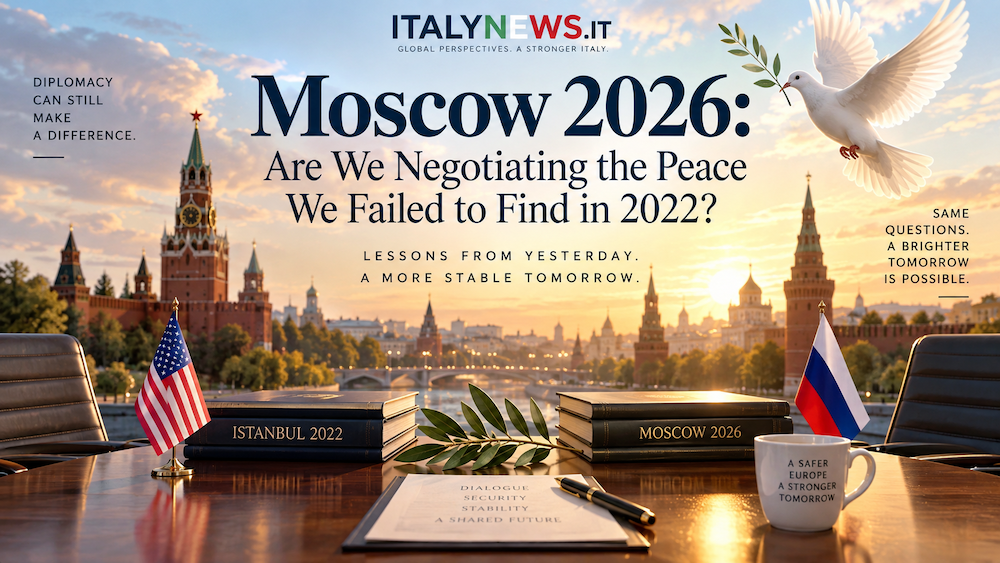
Perhaps we should place two images beside each other.
Istanbul. March 2022.
Russian and Ukrainian negotiators trying to define neutrality, security and territory.
Then: Moscow. September 2026.
An American delegation sitting across from Vladimir Putin, once again discussing possible routes towards ending the war.
Between those two rooms lies almost the entire history of this phase of the conflict.
And perhaps the most important question is not whether somebody could have stopped the war with a signature in April 2022.
History rarely offers certainties that simple.
The better question is whether the world learned anything from the negotiating opportunity that disappeared.
Because peace negotiations are not conducted outside war.
They are conducted while people are dying.
Every month spent believing that a better agreement can be obtained tomorrow has a price today.
Sometimes that price changes the outcome.
Sometimes it changes only the number of graves.
So as diplomacy returns to Moscow and Kyiv, perhaps the question we should ask is not merely:
Can peace be found in 2026?
But: Are we negotiating the peace we failed to find in 2022 — and if so, what did four more years of war achieve?
Observe. Understand. Share.
Riccardo Cacelli