
London – A door knocker, a walking stick and a weather-beaten shop sign might seem modest objects with which to tell the story of a literary imagination. For Charles Dickens, however, London’s everyday details were rich with possibilities. Behind a doorway might lurk a memorable character; a street corner could become the setting for an encounter that would captivate readers for generations.
Opening on 21 October at the Charles Dickens Museum, *Dickensian London: The Magic Lantern City* explores the relationship between the streets the author walked and the fictional world he created. Running until 18 April 2027, the exhibition brings together original manuscripts, letters and personal possessions, alongside objects that preserve physical fragments of the London he knew.
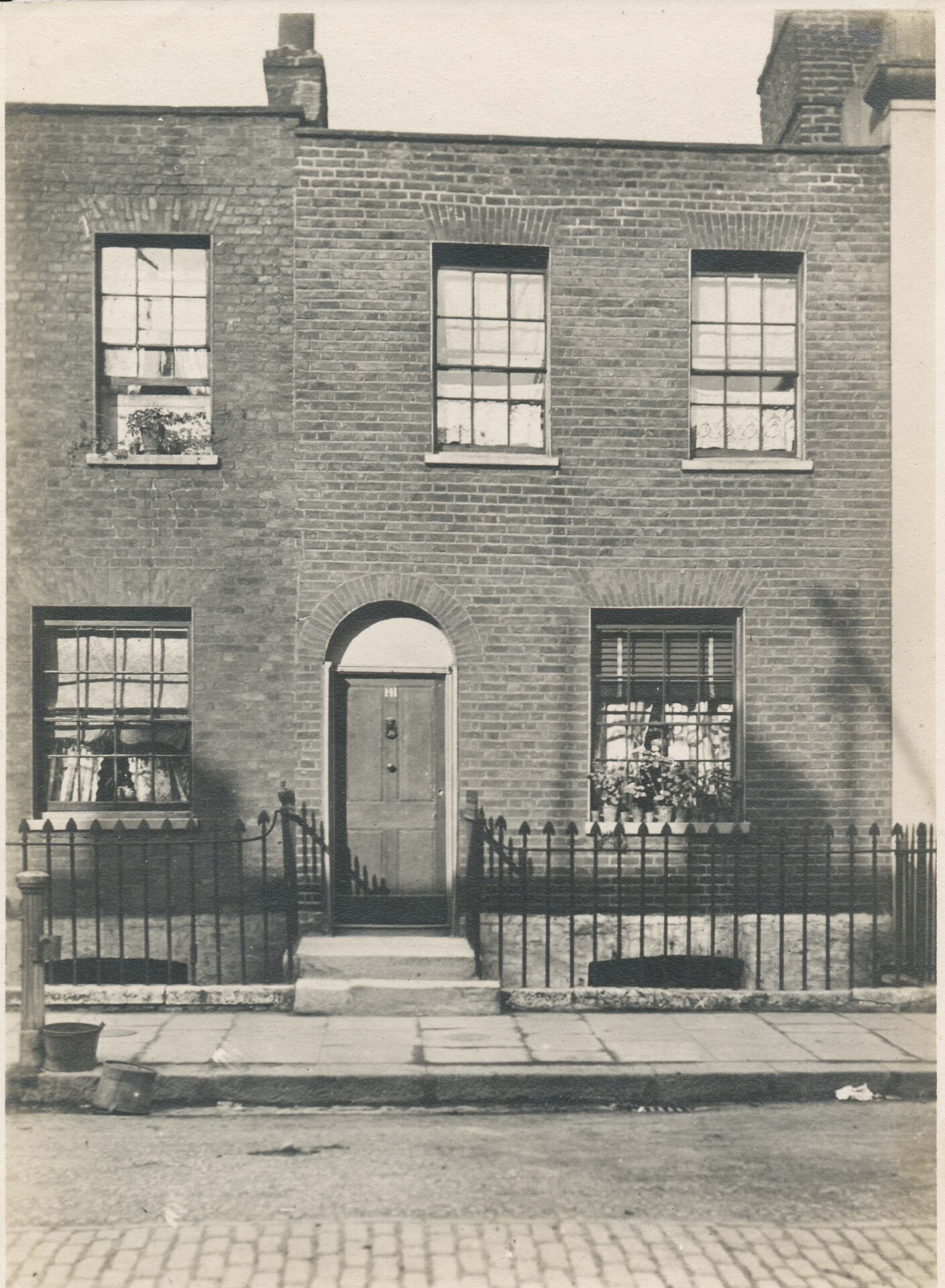
Its setting is particularly fitting. At 48 Doughty Street in Bloomsbury, Dickens wrote *Oliver Twist* and *Nicholas Nickleby*, and completed *The Pickwick Papers*. His only surviving London home offers an intimate starting point for an exhibition that follows his imagination out into the surrounding city.
London was essential fuel for Dickens’s writing. In an 1846 letter, he described how “a day in London sets me up again and starts me”, lamenting the immense labour of working without its “magic lantern”. The phrase supplies the exhibition’s title and its central idea: the capital provided an ever-changing succession of images that Dickens transformed into stories.
Walking was part of that creative process. His walking stick is among the objects on display, a reminder of the miles he covered while developing ideas and observing the lives around him. From Clerkenwell and Holborn to the shipping quarters of the City, the Thames and the West End, London offered both spectacle and disturbing evidence of inequality.
One of the exhibition’s outstanding attractions is the original handwritten manuscript of *Oliver Twist*, written at Doughty Street in 1837. The novel’s geography draws readers into the neighbourhoods within reach of the house: Clerkenwell Green, where Oliver discovers the true nature of Fagin’s gang, and Saffron Hill, the location of Fagin’s den.
Seeing the manuscript in the home where it was written creates a compelling connection between the physical act of writing and the streets that supplied its material.
Other exhibits reveal Dickens’s gift for giving ordinary objects personality. The Little Wooden Midshipman, a carved sign from William Heather’s nautical shop on Leadenhall Street, became a distinctive presence in *Dombey and Son*. Positioned outside the fictional Sol Gills’s shop, the figure observes passing traffic while accumulating London’s dust and soot.
A door knocker from the Dickens family’s former home at 16 Bayham Street, Camden Town, offers another glimpse of that imaginative curiosity. In *Sketches by Boz*, Dickens considered what a door knocker might disclose about the person who lived behind it. Even the smallest architectural detail could become an invitation to invent a life.
Among the more unusual exhibits is a 1904 edition of *Barnaby Rudge*, bound in wood taken from Newgate Prison and displayed for the first time. The object brings literature and the city’s material history together with striking directness. Newgate appears in several Dickens novels, including *Barnaby Rudge*, whose central character becomes caught up in the anti-Catholic Gordon Riots.
Also on show, for the first time in 92 years, is a wooden balustrade from Southwark’s White Hart coaching inn. It recalls the setting in *The Pickwick Papers* where Mr Pickwick meets Sam Weller, one of Dickens’s most enduring comic creations.
The exhibition’s appeal lies partly in this movement between the familiar and the unexpected. Celebrated novels sit alongside objects that encourage visitors to look more closely at how Dickens worked: noticing, remembering and transforming.
Sound and scent extend that exploration. A soundscape follows a walk from Doughty Street towards the Thames, while smells evoke the fragrant and unpleasant extremes of the Victorian capital. Interactive displays offer further routes through four areas of London, drawing on the museum’s extensive collections.
Crucially, this is a city of pleasure as well as hardship. Dickens delighted in its theatres, shops, convivial gatherings and excursions. Yet his writing also confronted poverty, imprisonment, unsafe housing and polluted water. The exhibition makes space for both sides of a place that could exhilarate and appal him.
His achievement was so persuasive that readers began seeking his fictional London during his lifetime. Visiting in 1866, *Little Women* author Louisa May Alcott looked for locations from his novels, imagining his characters just beyond their doorways.
That impulse remains easy to understand. Dickens’s London still shapes how we picture the Victorian city. By bringing his words together with the objects and places that inspired them, *The Magic Lantern City* offers an inviting opportunity to examine how that enduring vision was made.
*Dickensian London: The Magic Lantern City runs from 21 October 2026 to 18 April 2027 at the Charles Dickens Museum, 48–49 Doughty Street, London WC1N 2LX. For tickets and opening hours, visit [dickensmuseum.com](https://www.dickensmuseum.com).*