
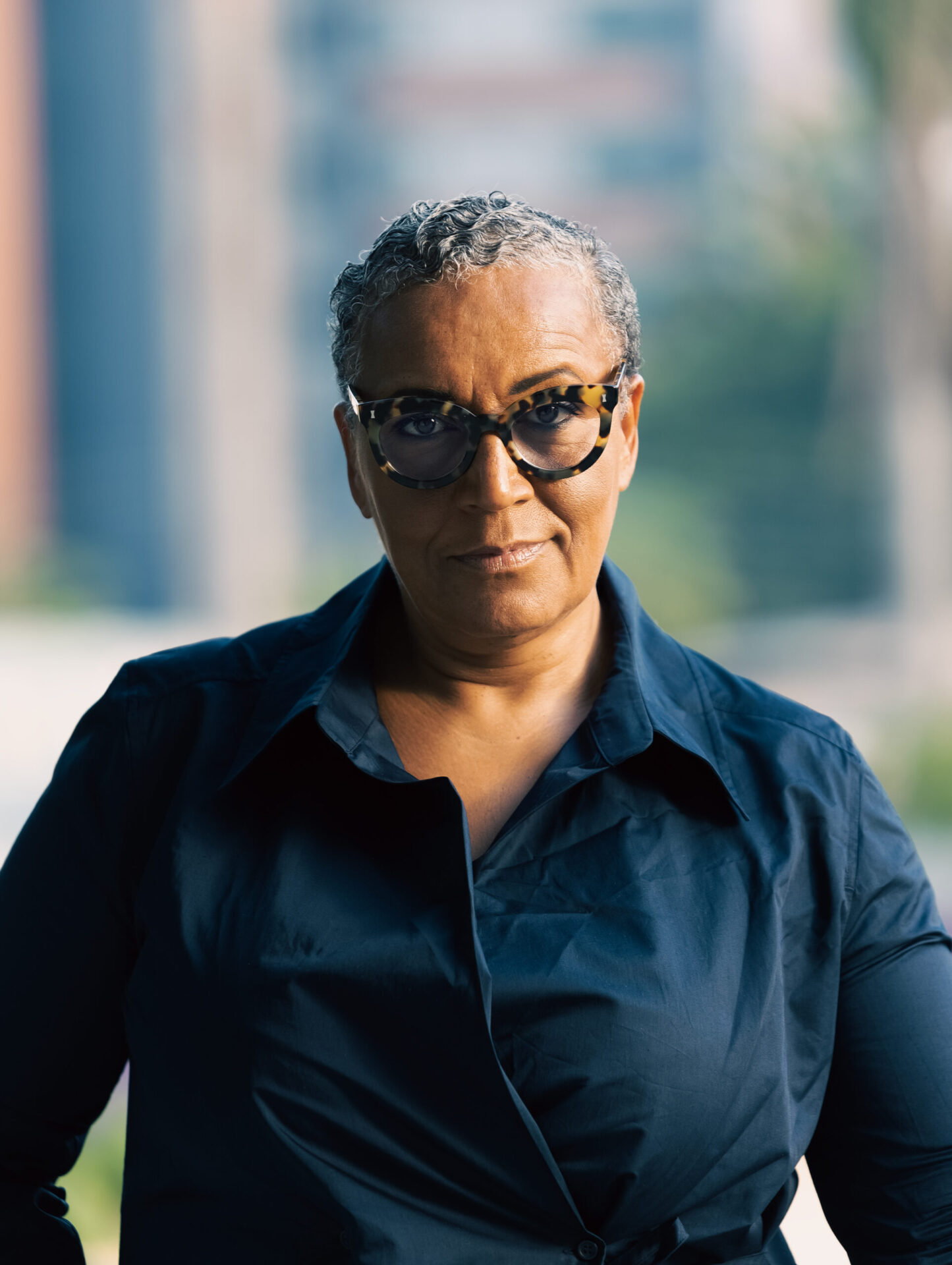
Among the keynote speakers taking part in “Worlds in Contact” at the Global Design Forum in Istanbul, Lesley Lokko brought intellectual depth, political urgency and visionary thinking to one of the most anticipated international gatherings dedicated to architecture, culture and design.
Global Design Forum, London Design Festival’s flagship platform for global design discourse, is presented in collaboration with People Places Ideas (PPI), with Artistic Direction from Melek Zeynep Bulut. @peopleplacesideas
Lokko’s keynote stood out for its reflection on the evolving role of architecture in a fractured yet interconnected world. Moving beyond the idea of architecture as the simple creation of buildings, she spoke of the responsibility of becoming “architects of ideas and architects of plans,” emphasising the need for designers and intellectuals to shape not only physical spaces, but also new cultural and political imaginaries.
The celebrated architect and curator also reflected on the founding of the African Futures Institute in Ghana, a project conceived to rethink architectural education from an African perspective and to create a platform where new generations of creatives can redefine the global discourse around design, identity and belonging.
Many of the themes explored during her intervention echoed ideas she has articulated throughout previous lectures and interviews. Speaking about decolonisation and education, Lokko has previously remarked: “Decolonization isn’t a zero sum game. It’s not about replacing one canon with another… it is a way to expand knowledge, critically, rigorously, inventively.”
Her long-standing commitment to widening access within architecture and amplifying underrepresented voices has also shaped much of her international work, from the Venice Architecture Biennale to her educational initiatives in Johannesburg and Accra. Reflecting on the future of architecture, she has stated: “It is impossible to build a better world if one cannot first imagine it.”
Lokko has repeatedly argued that architecture must engage more deeply with questions of identity, race and cultural memory. In a recent reflection on architectural education, she described the urgency felt by younger generations who are “impatient for meaningful change — not just lip service.”
Throughout her intervention in Istanbul, these ideas resonated strongly within the atmosphere of Hagia Irene, a place layered with centuries of cultural exchange and historical transformation. Her participation at the Global Design Forum reinforced the event’s ambition to position design not merely as aesthetics, but as a powerful tool for dialogue, imagination and change.
About Lesley Lokko
Professor Lesley Lokko OBE is the Founder and CEO of the African Futures Institute (AFI) headquartered in Accra, Ghana and Director of the Nomadic African Studio; an annual month-long teaching programme located in different cities around the African continent. She holds a BSc (Arch), M Arch and PhD in Architecture from the Bartlett School of Architecture, University College London. She was the Founder and Director of the Graduate School of Architecture, University of Johannesburg (2014—2019). She is the Editor of White Papers, Black Marks: Race, Culture, Architecture (University of Minnesota Press, 2000) and the Editor-in-Chief of FOLIO: Journal of Contemporary African Architecture.
She was appointed Curator of the 18th International Architecture Biennale at La Biennale di Venezia in 2023. In January 2023, she was awarded an OBE ‘for services to architecture and education’ in King Charles’ New Year’s Honours List. In January 2024, she was awarded the UK’s highest architecture award, the RIBA Royal Gold Medal. She was named one of the world’s 100 most influential people in the 2024 annual TIME100 list and Ebony Power 100. She is currently a member of the 2025 Aga Khan Award for Architecture Steering Committee. She was appointed a World Design Congress Ambassador for 2025. In 2026 she was included in the Forbes 50 over 50 Global:2026.
Follow the editor on instagram @francescalombardo_author