A motorway cutting through the Pennines, figures suspended in pools of light, an elephant matriarch approaching death and crude oil encased in acrylic: the four presentations in this year’s Turner Prize exhibition explore very different worlds.
MIMA, Middlesbrough Institute of Modern Art, brings together works by Simeon Barclay, Kira Freije, Marguerite Humeau and Tanoa Sasraku for the Turner Prize 2026 exhibition. Open from 26 September 2026 to 29 March 2027, the free exhibition places questions about personal history, human connection and the use of natural resources at its centre. The winner will be announced on 10 December.
Part of Teesside University, MIMA provides a setting in which these artistic concerns meet the histories and experiences of Middlesbrough and the wider region.
“Bringing Turner Prize 2026 to MIMA creates a meeting between four exceptional artistic practices and the histories, experiences and imaginations of Middlesbrough, Teesside and the North East,” said Dr Laura Sillars, MIMA’s director and Dean of Culture & Creativity at Teesside University.
Simeon Barclay: public ambition and private memory
Barclay is nominated for The Ruin, a performance commissioned by the Roberts Institute of Art and presented at London’s Institute of Contemporary Arts, The Hepworth Wakefield and New Art Exchange in Nottingham.
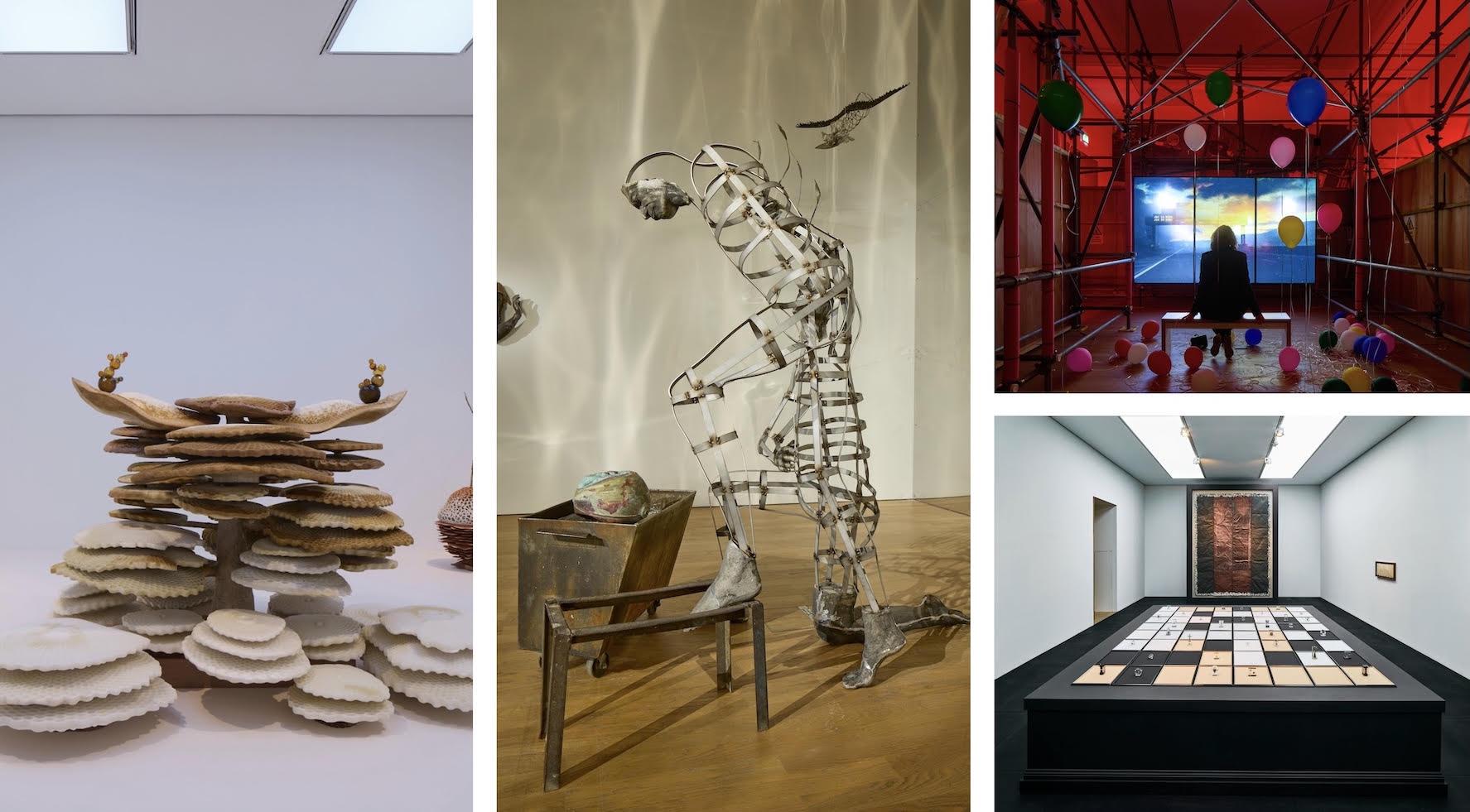
At MIMA, he translates the energy of live performance into an installation animated by his own voice. The work returns to the construction of the M62 through the Pennines, exploring the ambitions behind the motorway and the freedom it offered communities around Huddersfield, where he grew up.
Scaffolding forms a temporary structure, suggesting a shared history still under construction. Alongside this account of public infrastructure, Barclay introduces more intimate memories, taking audiences into his childhood living room and the dominating presence of his father.
The movement between these scales — a landscape reshaped by planners and a household shaped by family relationships — connects the story of postwar Britain with personal experience.
Kira Freije: figures sharing an uncertain world
Freije’s nomination recognises Unspeak the Chorus, her solo exhibition at The Hepworth Wakefield, co-commissioned with Modern Art Oxford.
Her presentation at MIMA gathers human and animal forms in a space of reflected light and gentle mist. Slender strips of welded steel outline the figures, while aluminium casts give them faces, hands and feet. Points of light suggest a night sky, reflected across the sculptures by mirrored walls.
The figures’ gestures evoke care, grief, companionship and uncertainty, without prescribing a single story. They appear connected to one another, yet also absorbed in private thoughts.
Found textiles, glass and salvaged materials introduce traces of earlier uses and lives. Animal forms include birds in flight and references to Freije’s dog, Laska, extending the installation’s attention to the ways living beings occupy and share space.
Marguerite Humeau: imagining life beyond the human
Humeau is nominated for Torches, shown at ARKEN Museum of Contemporary Art in Denmark and Helsinki Art Museum.
At MIMA, her sculptural beings inhabit a landscape beneath translucent glass orbs. A monumental elephant matriarch approaches death, while other figures act as guardians of precious substances. Death is presented as a moment of renewal, allowing new life to emerge.
These imagined worlds draw on research and collaboration with zoologists, anthropologists, foragers, clairvoyants and others. Humeau considers what the intelligence of animals, insects, fungi and micro-organisms might reveal about co-operation, resilience and survival.
Visitors also become part of the installation’s changing environment. Their footsteps leave marks on soft white flooring, gradually altering the shared landscape and giving physical form to the idea that human activity belongs within a larger living system.
Tanoa Sasraku: the materials of power
Sasraku, nominated for her solo exhibition Morale Patch at the ICA in London, examines the objects, processes and visual language associated with extraction and power.
Her MIMA presentation addresses “extractivism”: the aggressive, large-scale removal of natural resources for profit. Raw pigments from Cornwall and Ghana saturate a paper suit pattern, while liquid crude oil is enclosed in acrylic paperweights — placing the resource inside a material derived from petrochemicals.
Elsewhere, bleached stripes on brittle paper are held together with binder clips, with titles referring to battles. Carefully constructed supports lend the objects an air of authority and pride, raising questions about how the spoils of extraction and war are displayed and valued.
A dark rubber floor absorbs light, directing attention towards the objects and the substances from which they are made.
Established in 1984, the Turner Prize recognises an outstanding exhibition or presentation by a British artist and aims to encourage public debate about contemporary art. This year’s winner will receive £25,000, with £10,000 awarded to each of the other shortlisted artists.
The MIMA exhibition is curated by Dr Claire Louise Staunton and Helen Welford. Its four presentations offer audiences distinct starting points for that debate: how the past shapes us, how we live alongside others, and what our treatment of the natural world reveals about the structures of power.
Visitor information: Turner Prize 2026 is at MIMA, Centre Square, Middlesbrough, TS1 2AZ, until 29 March 2027. Admission is free. Open Tuesday–Saturday, 10am–4.30pm, with last entry at 3.30pm; Sunday, noon–4pm, with last entry at 3pm. Closed Mondays.