
WASHINGTON D.C. – The United States Supreme Court has issued a ruling with significant constitutional and commercial implications: by a 6-3 vote, the nation’s highest court determined that President Donald Trump does not have the authority to impose large-scale tariffs relying on the International Emergency Economic Powers Act (IEEPA), a 1977 law designed to grant the president special powers in the event of national emergencies. The ruling clarifies that the authority to impose tariffs lies with Congress, not the Executive, reaffirming one of the cornerstone principles of the U.S. Constitution: the separation of powers between the legislative and executive branches.
The Court emphasized that the IEEPA does not explicitly reference the imposition of tariffs and therefore cannot be interpreted to grant fiscal powers to the president. The decision specifically concerns “global” tariffs imposed by the Trump administration starting in 2025 on a wide range of imported products from countries such as China, Canada, Mexico, and European Union members.
This ruling has already sparked a broad debate on which tools the Administration can still use to regulate international trade. While it represents a setback for one of Trump’s major trade policy strategies, experts note that this does not mean the United States cannot impose tariffs in the future—but that such measures must be approved through specific legislation by Congress or adopted through other mechanisms provided under trade law.
Political Reaction from Trump
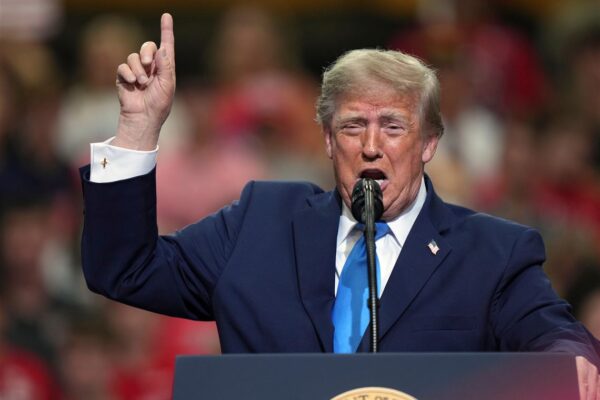
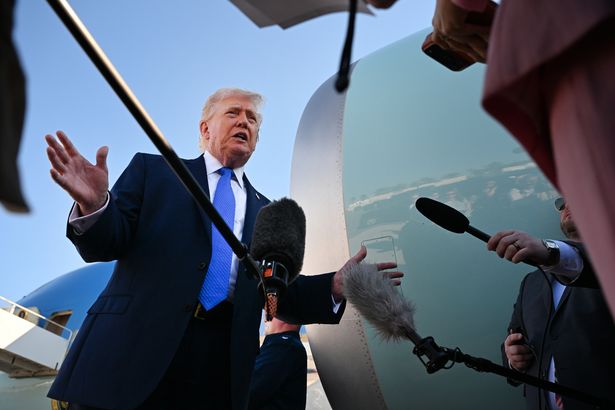
President Donald Trump did not accept the Court’s decision without comment. According to CNN, Trump described the rejection of the tariffs as a “disgrace,” while promising to have a “backup plan” to maintain some form of trade protection without violating the constitutional limits set by the ruling.
The White House is now evaluating legal and political alternatives to preserve parts of its trade policy, taking into account the clear distinction the Court reaffirmed between Congressional authority and executive powers. This political debate is expected to continue in the coming weeks, with potential proposals for new legislation or reforms passing through the federal Parliament.
Direct Effects and Prospects for Existing Tariffs
The ruling could affect all tariffs imposed unilaterally by the Executive, including the 15% tariffs on European goods and other similar levies adopted without a clear Congressional mandate. These tariffs, previously imposed through executive orders and classified by the Administration as measures against trade imbalances or threats to national security, are now challenged for their constitutional legitimacy.
Some business operators and trade associations are already considering the possibility of requesting refunds for tariffs already paid, as companies importing goods into the United States may be entitled to reimbursement for amounts charged under tariff policies valid only until this ruling. Preliminary estimates indicate that the total amount of tariffs collected under the IEEPA could exceed $175 billion, a significant sum that could lead to complex refund claims if confirmed in practice.
Financial Market Reactions
The ruling had an immediate impact on stock markets. Major indices in both the United States and Europe registered gains following the news, partly because the removal of unilateral tariffs reduces a source of uncertainty in international trade and benefits import-dependent sectors. In the U.S., the S&P 500 and Nasdaq closed positive, while the dollar weakened against major global currencies.
The effect also spread to European markets, where the prospect of more predictable trade relations with the United States encouraged buying across various industrial sectors. This reflects investors’ expectations that lower or eliminated tariffs could reduce costs for European exporting companies and foster a more favorable trade environment.
International Institutional Reactions
The Supreme Court’s decision has drawn institutional reactions. A spokesperson for the European Commission stated that the European Union “takes note of the ruling and is carefully analyzing the situation,” emphasizing the importance of “stable and predictable trade relations for businesses on both sides of the Atlantic” and reaffirming support for low tariffs and their gradual reduction.
Canada also issued a clear reaction to the Supreme Court’s decision. The Canadian government described the ruling as confirmation that the tariffs imposed by the United States were “unjustified,” highlighting how U.S. trade policy had caused tensions with key trading partners and disrupted global supply chains.
Future Scenarios for International Trade
The ruling comes in a context where global trade relations had been shaken for several months by a series of unilateral tariffs imposed by the U.S. administration, including high rates on steel, aluminum, and other industrial products. In the past, some of these measures had been temporarily blocked by other federal courts, with administrations and business groups clashing over the interpretation of executive power.
The ruling strengthens Congress’s role as the primary authority in shaping trade policy and will require federal lawmakers to play an active role in any new large-scale tariff system. At the same time, the Executive still has possibilities to use more specific regulations already provided by Congress to introduce targeted trade measures in specific sectors, such as those based on sectoral legislation or multilateral agreements.